
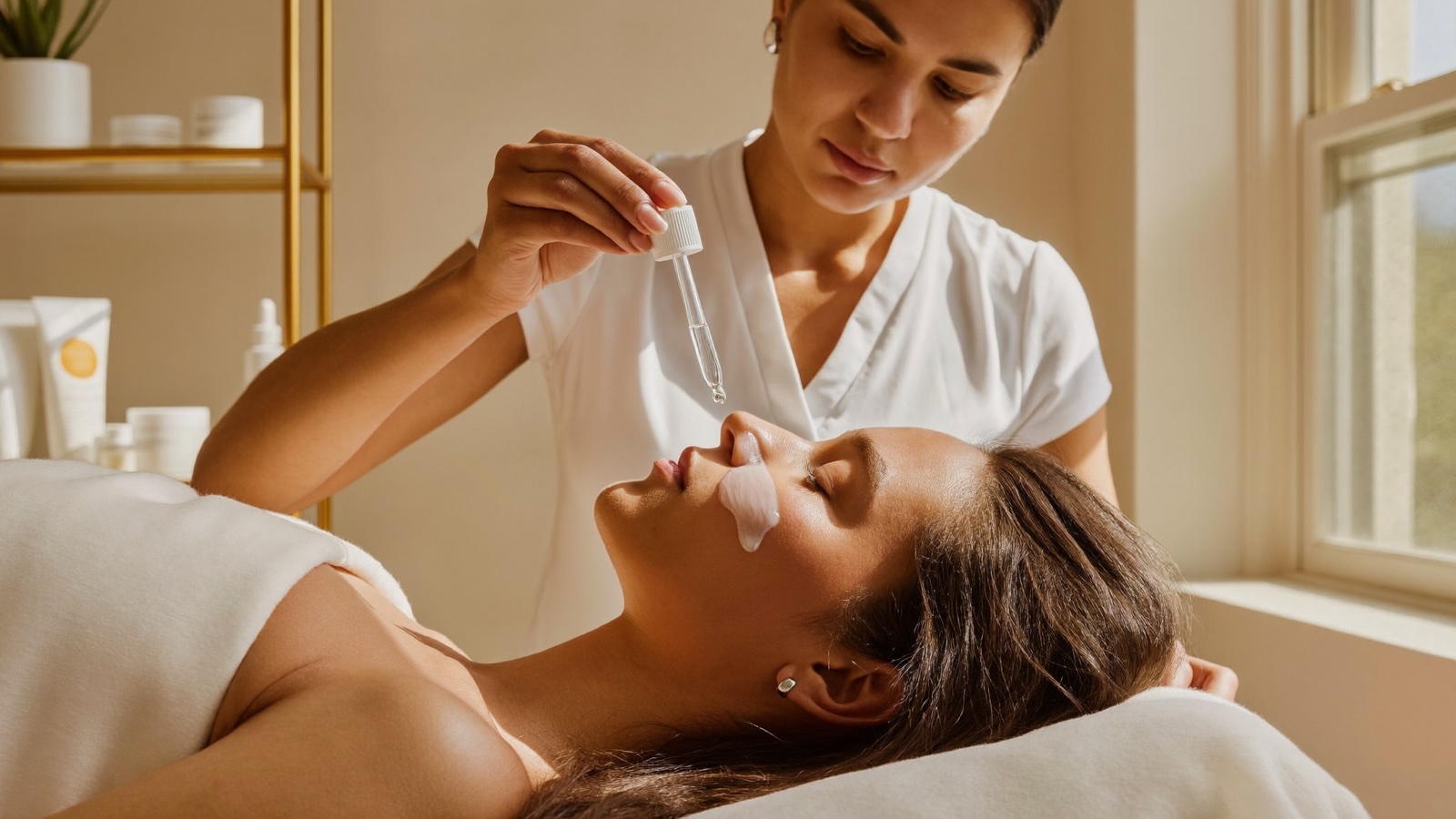
Hyperpigmentation is one of the most common skin-tone concerns we treat at our Manhattan studio. Whether it shows up as sun spots, post-acne marks, or the diffuse patches of melasma, uneven tone can make skin look tired long before fine lines do. The good news: with an accurate assessment and a consistent, layered plan, most dark spots can be meaningfully softened over time. Individual results may vary.
What causes hyperpigmentation?
Hyperpigmentation happens when melanocytes — the cells that produce pigment — become overactive and deposit excess melanin in the skin. The trigger determines the type, and the type shapes the treatment plan.
- Sun-induced (solar lentigines): Cumulative UV exposure produces flat brown spots, most often on the face, chest, and hands.
- Post-inflammatory (PIH): Marks left behind after acne, ingrown hairs, or any skin injury. Common and often the most responsive to treatment.
- Melasma: Hormonally influenced, symmetrical patches that flare with sun and heat. This type is managed rather than “cured” and demands the gentlest approach.
Because these look similar to the untrained eye but behave very differently, we begin every plan with a proper skin analysis rather than a one-size-fits-all product. Factors like your skin type, how deep the pigment sits, and whether the spots are still forming all change the safest path forward — an aggressive treatment on reactive skin can trigger more pigment rather than less, which is exactly what we want to avoid.
Clinical treatments that even skin tone
No single step erases pigment overnight. A clinical approach layers gentle exfoliation, controlled resurfacing, and daily protection so pigment is broken up while new spots are prevented.
Dermabrasion and resurfacing
Professional dermabrasion mechanically refines the outer layer of skin, lifting away pigment-laden dead cells and encouraging fresher, more uniform tone to surface. Done in a controlled clinical setting, it improves texture and brightness while helping active ingredients absorb more effectively afterward.
Microneedling
Microneedling creates thousands of micro-channels that prompt the skin’s natural repair response and support more even pigment distribution over a series of sessions. It pairs well with targeted brightening serums and is a mainstay of our skin-health services for post-acne marks and dull, uneven tone.
Targeted brightening at home
In-studio work is only half the plan. A tailored home routine — often built around vitamin C, niacinamide, gentle acids, and a retinoid where appropriate — keeps melanocytes calm between visits and protects your results. We introduce these ingredients gradually so the skin adapts without irritation, because irritation itself can spark new post-inflammatory pigment and set you back.
Every plan is sequenced. We typically start conservatively, assess how your skin responds after the first session or two, and only then increase intensity. This measured pacing is deliberate: it protects your barrier, keeps downtime minimal, and gives us clear feedback about which combination your skin actually rewards.
What the timeline really looks like
Pigment sits at different depths, so patience matters. Surface sun spots and mild post-acne marks often begin fading within a few weeks, while deeper or hormonally driven pigment can take several months of consistent care. Most clients follow a plan of three to six spaced sessions, then shift to maintenance. Skipping sun protection is the single fastest way to undo progress.
Aftercare that protects your results
Aftercare is where even tone is won or lost. In the days following a resurfacing or microneedling session:
- Apply broad-spectrum SPF 30+ every morning and reapply through the day.
- Keep the skin barrier calm with a simple, fragrance-free moisturizer.
- Pause active acids and retinoids until we clear you to resume.
- Avoid picking, waxing, or aggressive scrubbing on treated areas.
Consistent sunscreen isn’t optional here — UV is the primary driver of new pigment, so daily protection is what makes the rest of the plan work.
Is treatment right for you?
Because melasma, PIH, and sun damage each respond differently, the safest first step is an in-person assessment where we map your pigment, review your history, and build a plan matched to your skin. If you’re in Manhattan or the wider NYC area and ready to work toward clearer, more even tone, book a consultation and we’ll walk you through your options. Individual results may vary; treatment is not a medical cure.
Frequently asked questions
How long does it take to see results on dark spots?
It depends on the type and depth of pigment. Surface sun spots and mild post-acne marks often start softening within a few weeks, while deeper or hormonally driven pigment such as melasma can take several months of consistent, spaced sessions. Individual results may vary.
Can hyperpigmentation come back after treatment?
Yes. Because UV exposure and hormones can re-trigger melanin production, new spots can appear if sun protection lapses. Daily broad-spectrum SPF and a maintenance routine are essential to keep your results, especially with melasma.
Is microneedling or dermabrasion better for uneven tone?
Neither is universally “better” — they address pigment in different ways, and many plans combine them. We choose based on your pigment type, skin sensitivity, and goals during your consultation.
Does treating hyperpigmentation hurt?
Most clients describe our resurfacing and microneedling sessions as tolerable, with mild warmth or tingling. We tailor intensity to your comfort and skin type, and we review every step before we begin.

You Might Also Like
Microblading vs. Powder Brows: Which Permanent Brow Technique Is Right for You?
Microblading vs. powder brows in Manhattan: compare hair-stroke and soft powder finishes, skin types, healing, and longevity to...
Read more
Clinical Acne Treatment for Face and Back: A Results-Oriented Approach to Clearing Breakouts
Clear breakouts and help prevent scarring with clinical acne treatment for face and back in Manhattan, NYC. Book...
Read more
Permanent Lip Color: What to Expect From Healing and Longevity
How permanent lip color heals day 1-14 and lasts 2-3 years. Aftercare, longevity and natural lip tint from...
Read more